

You Are A City
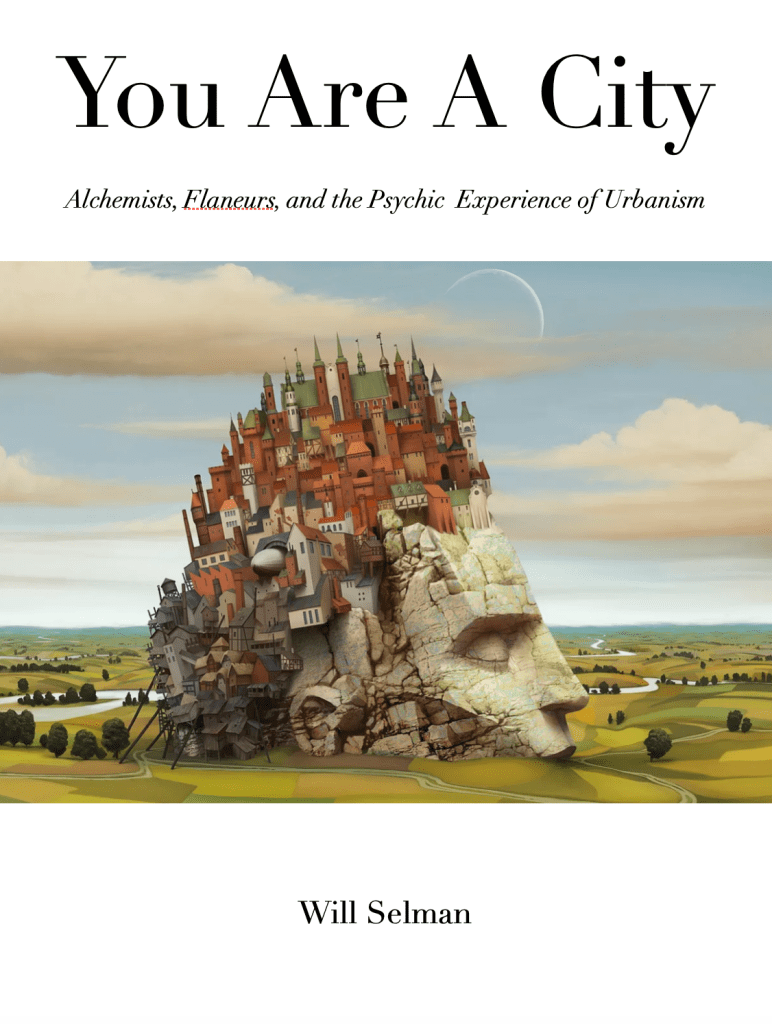
This is a book about connecting more deeply with soul by making use of the city as a tool and setting for psychic exploration. The city itself is here understood as the embodiment of collective soul, and its elements reflect the inner complexity of our individual souls. Physical urban space is rarely thought of in such a way; normally we assume that spiritual activities ought to take place in a quiet room or in green nature like a mountaintop or under a tree by a stream, or a wild beach at sunset. While that is of course appropriate, I say that the city also can provide such a setting. Beyond that, what this book seeks to promote is an understanding of civilization, including both cities and our individual inner lives, as a series of long cycles of human psychic development over tens of thousands of years. We are in the midst of in the midst of yet another dramatic shift in these ongoing cycles of history, and the city – or town, village, or your very own neighborhood – is a highly valuable tool in our understanding of this process. It can provide insights into not only one’s personal journey of inner growth, but also the ongoing project of human psychic evolution.
Temenos
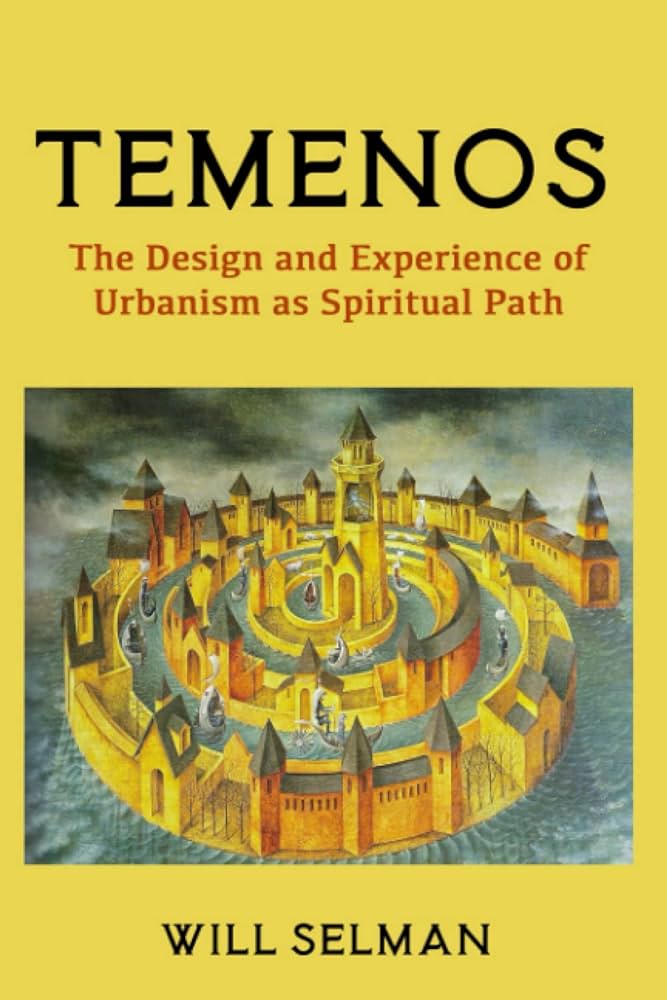
The unfortunate state of our cities and towns is not so much a problem of design and policy as a reflection of a loss of spiritual values and purpose on a civilizational scale. But if our built environment reflects our deeper spiritual intentions, the experience of the city can be a source of psychic uplift. So argues urban consultant Will Selman in his tour de force book Temenos: The Design and Experience of Urbanism as Spiritual Path.
Selman begins with the assertion that the fundamental task of humanity, throughout time and across cultures, is the spiritual quest to awaken to greater insight and more conscious awareness. This is an evolutionary process on the personal and collective level, and, as he then illustrates, our built environments have an important role to play in that psycho-spiritual awakening.
Temenos takes the reader on an eclectic journey through ancient mythology, shamanism, Jungian psychology, integral spirituality, sacred geometry, money and materialism, the history of suburban sprawl, and urbanism as storytelling, to name a few stops along the way to his final destination—a new approach to design he calls “Symbolic Urbanism,” based on the example of L’Enfant’s plan for Washington, DC. Using images and compelling storytelling, Temenos is an engaging read for spiritual seekers who desire to discover the potential of urban towns and cities to support their journey, and for advocates of urban placemaking who desire to infuse their work with a more soulful approach.
 Symbolic Urbanism