

The Institute for Symbolic Urbanism is, in a sense, a response to an observation made by Camillo Sitte, author of The Art of Building Cities. Written in 1889, he states, “At present there are severe limitations upon art in building cities. We can no longer create a superior, finished work of art like the Acropolis of Athens. Even if the tremendous cost were supportable, we lack … a universally accepted explanation of reality throbbing in the daily life of the people – that could find expression in such a work…” (emphasis added).
What Sitte realized was that urbanism does not merely face a design problem; its shortcomings are merely aspects of a vastly greater crisis of civilization. This loss of purpose and meaning for western civilization has been a long and slow process coinciding with the rise of rational scientific materialism and the decline of the Christian mythos. In other words, our civilization no longer has any foundational myth for cities, as the highest expression of civilization, to reflect. There is no story to tell.
No society can function without a unifying mythological story. Our own western civilization so often feels as if it is entering the final stages of collapse, with stories of unbridgeable political divides, climate change, economic imbalances, culture wars, the societal loss of respect for traditional religious insight and authority, and private psychic trauma. This seems to be yet another stage of an ongoing, repeating pattern in civilizational history; yet surprisingly it represents humanity’s slow and painfully awkward process of awakening into greater conscious awareness over the course of thousands of years.
The places we build reflect the values we hold. And just as the long-standing values of western civilization are proving to be too small to confront our ever-widening horizons, so too has our American built environment (and accompanying lifestyle assumptions) become profoundly unsustainable. There is a relationship here. New patterns of living and thinking – and therefore building – are needed.
The ISU seeks to explore the reasons why we have lost that “universally accepted explanation of reality,” and trace its source back so as to locate our culture in context and thus understand ourselves more clearly. The Institute seeks a new way forward for the purposes of urban life; to experience the life of a city and make use of urbanism as a setting and tool for the advent and experience of some as-yet unrealized spiritual rebirth. What will constitute that new vision is of course unknown, but it will no doubt function as a continuation and expansion of what has gone before. So too will its urban expression.
Thus, there are two fundamental assumptions underlying the intent of the Institute. First, that the essential task of humanity, throughout all time and cultures, is that of spiritual quest and psychological development. This has both a personal and collective aspect, and is evolutionary in nature; that is, over the centuries, humanity awakens to greater and larger insight, as it seeks to understand who and what we are, what the purpose is, if any, of our being here, and how to conduct ourselves. This psychological quest has been expressed over many tens of thousands of years in the form of myth, ritual, poetry, mysticism, and religion.
The second assumption is that the built environment has a basic role to play in that process, that the shape and design of our cities and towns can and should support this quest. The provision of efficient infrastructure is not enough; our cities must be understood primarily as places where our stories can be told. As spirits embodied in the physical realm, we are blessed with the opportunity to discover the eternal through our experience of the temporal.
In order to elevate the task of our urbanism, infusing the design and redevelopment of urban places with meaning and purpose is a critical need. Providing the right elements of community is no longer sufficient, but those elements in relation to one another in a meaningful pattern. Myth, symbol, and the geometry of metaphor can provide this. The ISU thus emphasizes the insights of the psychologist Carl Jung and associated thinkers. Urbanistically, the Institute seeks to promote the traditional design and policy assumptions found in the Charter of the New Urbanism.
The work of the ISU is to explore what those ancient yet still living myths are, what newly emerging and not-yet fully formed values might be, and relate them to new forms and patterns for the repair of our built environment. Our cities and towns thus can become classrooms of spiritual and psychic exploration, supporting that ongoing psychic awakening into consciousness
This new pattern is given the name Symbolic Urbanism.
Services
- Urban Design Services
- Lectures & Speaking Events
- Teaching
- Mentorship
- Symbolic Urbanism Tours
Will Selman, ISU Founder
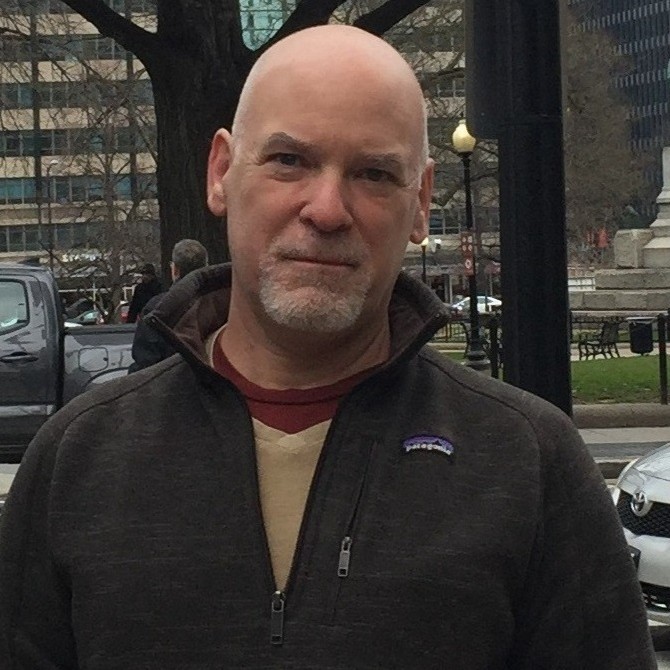
Will Selman, CNU-A, is the founder of of the Institute for Symbolic Urbanism and a New Urbanist land planning consultant in Washington, DC. He is the author of Temenos: The Design and Experience of Urbanism as a Spiritual Path. A thirty-year member of the Congress for the New Urbanism, he is professionally focused on issues surrounding land development, zoning and comprehensive planning, the design of traditional walkable and sustainable mixed use neighborhoods, and community visioning and charrettes.
 Symbolic Urbanism